Impact!
Our Recipe for a Thriving Community has demonstrated results all the way from the outlying river valleys where we work to the city of Cumana.
FAMILY PLANNING
- From 1997 through 2025, we have delivered 342,432 Couple Years of Protection (CYPs), the internationally accepted metric for family planning achievement.
- We did this by serving more than 85,000 rural and low-income urban (barrio) women and their families, totaling an estimated 300,000 beneficiaries.
- We have also delivered 6,071 Educational Workshops on Sexual and Reproductive Health to over 164,826 adults, students, teenagers, and public service and education personnel.
- We have achieved all of this on an average family planning budget of about $220,000 a year, at an average cost of less than $12 per CYP over the last 15 years.
- The enormous and unsatisfied demand for family planning and reproductive health services in our area still far exceeds our current funding and capacity, but we have the infrastructure in place and are ready to expand our services with your support!
EDUCATION

- We fund 50+ scholarships a year, encouraging remote rural students to finish high school.
- More than 500 rural students have attended high school where, previously, they would have abandoned their education at or before the sixth grade.
- More than 100 have graduated from high school; at any given time, some 15 selected low-income graduates are attending local colleges with our support.
- Our Rural Education Center, located several walking hours into the river valley, offers computers, library facilities, and tutoring for primary, high school, and college students.
- Several outlets for subsidized school supplies—for preschool, primary, and high school students—are run by students and their mothers out of local rural homes.
- Access to computers and the Internet is available for low-income students and community activists at our urban cyber center.
- Over the years, we have helped construct and maintain a rural kindergarten, a childcare center, several school libraries, and a school cafeteria for the government’s lunch program.
- We support baseball, soccer, and other sports to help students stay creatively engaged when not in school!
COMMUNITY DEVELOPMENT
Over the years, projects in the remote river valley where we live and work include:
- Installation and maintenance of gravity-piped potable water for 120+ valley families.
- Installation of solar electricity for 25+ valley homes, the local church, and the school complex.
- Support for rural infrastructure, such as maintaining bridges, trails, and remote schools.
- Periodic vaccination campaigns against paralytic rabies and encephalitis for hundreds of burros, mules, and other domestic animals.
- Distribution of Durian, Mangosteen, Jackfruit, Rollinia, Carambola, and other tropical fruit cultivars to farmers and Venezuelan agricultural institutions.
- Expanding tree farming with unusual tropical fruits to rebuild deforested landscapes and provide local farmers with new revenue streams through permaculture.
- Our Community Center served for ten years as a base for meetings, food distribution, and storage; now in private local hands, it continues to offer many of these functions.
HUMANITARIAN AID
Some doctors and partners have called us the “Doctors Without Borders” of Sucre state!
- Through 2025, we have performed 19,810 surgical procedures, including tubal sterilizations, vasectomies, and various gynecological, orthopedic, and pediatric interventions.
- We have cumulatively offered 25,754 medical consultations in reproductive health and primary care.
- We provided 8,400 Medical Follow-ups, including lab work, imaging, medicine, eyeglasses, nutrition, and biopsies.
- The demand for health care in our area far exceeds our current funding, but we have the personnel in place and are eager to expand our services with your support.
Big impact in just one generation!
- Fewer unplanned children.
- Reduced infant and maternal mortality and morbidity.
- More rural students, especially girls, continue from primary to high school – and graduate!
- Some of these rural students continue to university using smartphones and computers online with Foundation support.
- Computers, smartphones and the Internet are available for the first time.
- Clean gravity-piped water and solar electricity have reached many off-the-grid families.
- The unusual fruit trees that we have introduced, like Durian, Mangosteen, and Jackfruit, are finding homes and commercial interest not only locally, but in other parts of the country.
- The community collaborates more in projects to improve their lives.
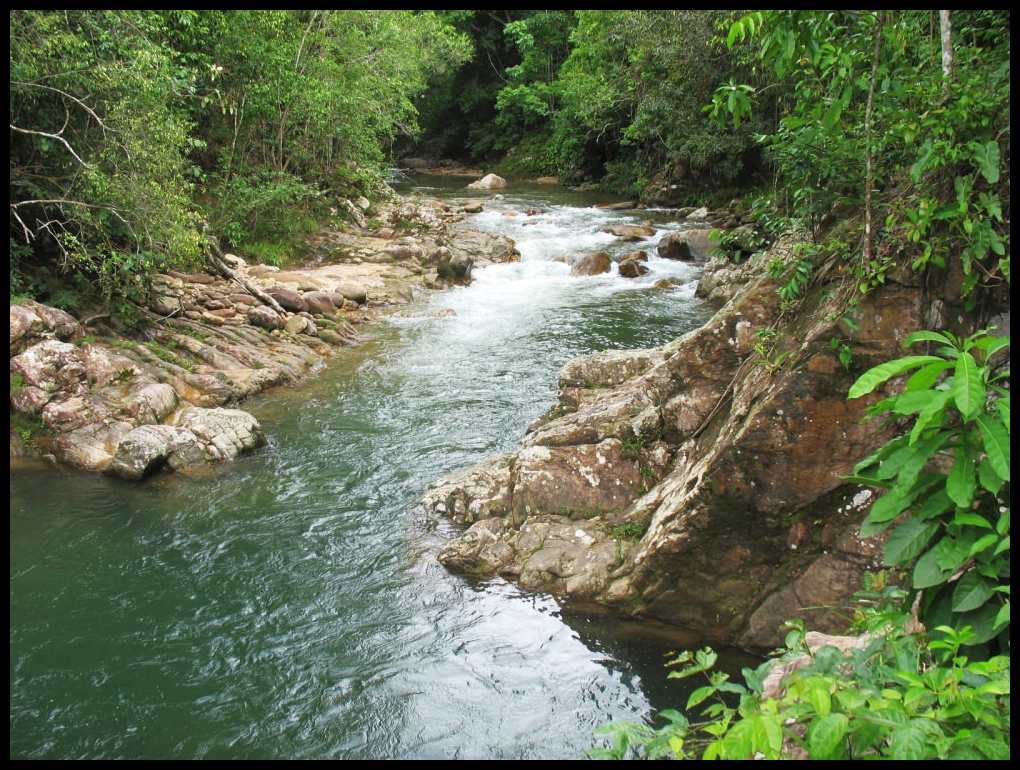
Nature is benefitting, too …
As the local population has stabilized, the impact on river valleys in the region is noticeable. Upper valleys are returning to lush tropical woods, wildlife is prospering, birds are more abundant, and the streams are running cleaner. As the younger generations bring less mouths to feed, the devastating effect of repeated slash-and-burn agriculture on the tropical forest is reduced, and the extensive secondary growth is finally returning. After some 400 years of non-stop, intensive exploitation and diminishing returns, there is now less erosion and more reforestation. A long natural healing process has begun!
